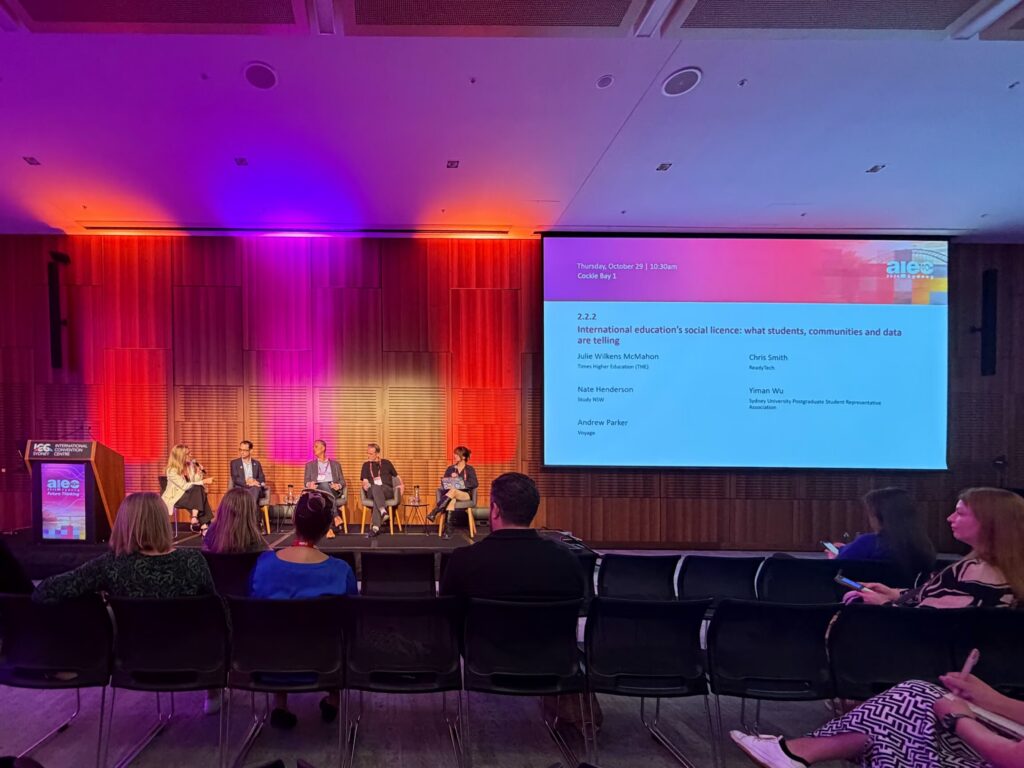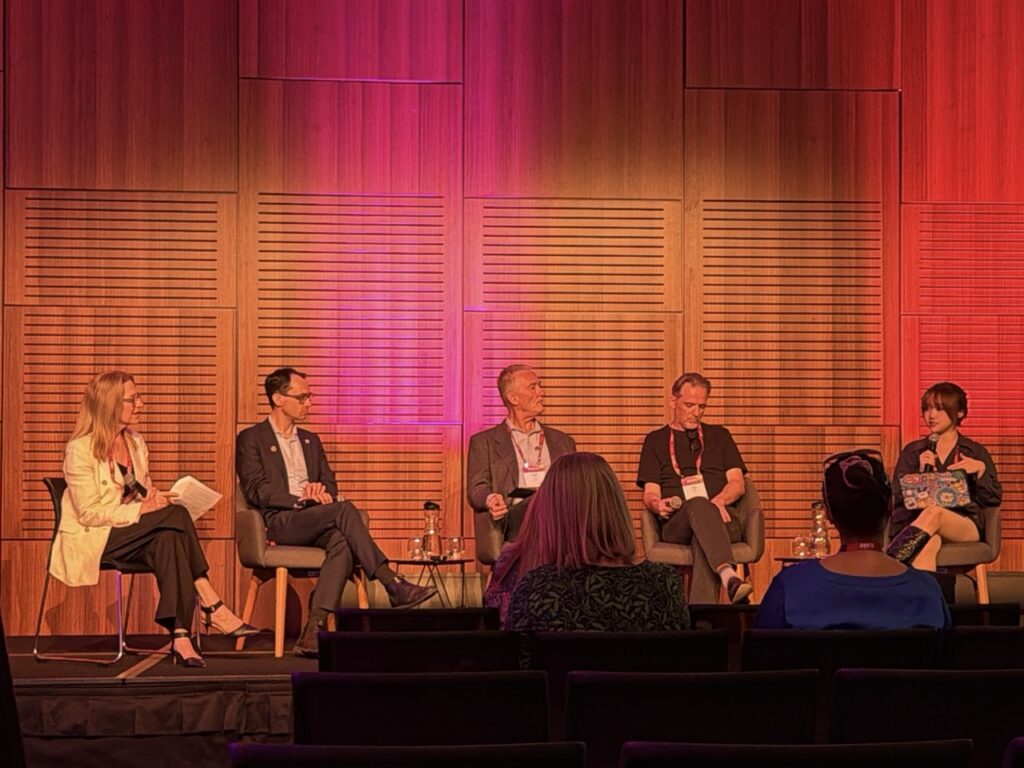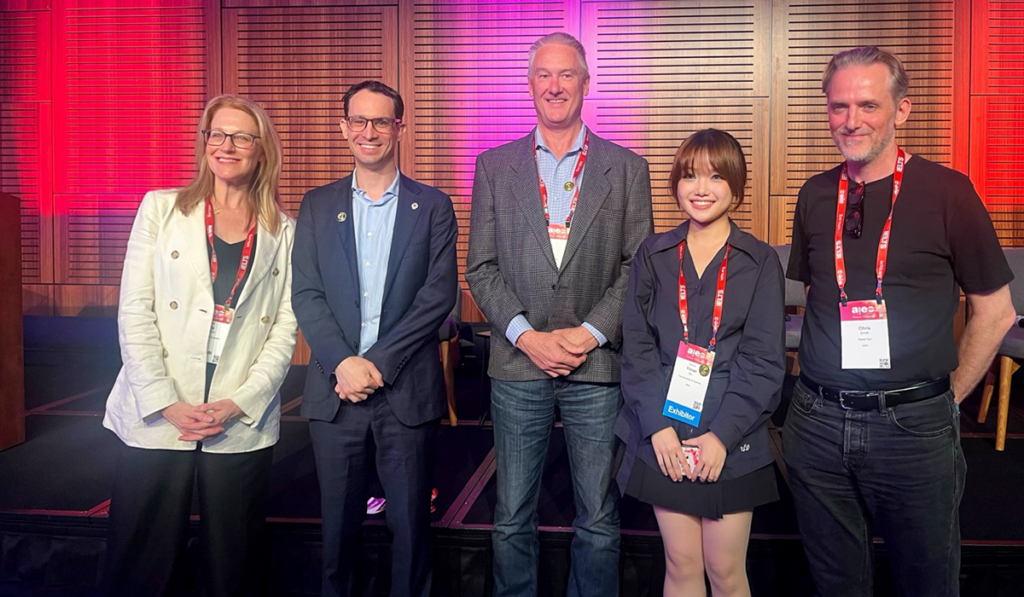
Presentation at the Australian International Education Conference (AIEC 2026), Session 2.2.2 Panel Discussion, Cockle Bay 1, International Convention Centre Sydney, 10:30–11:30 AM, 29 October 2026.
Yiman Wu, Master of Arts (Research) Student, Discipline of Media and Communications, The University of Sydney; President, Sydney University Postgraduate Representative Association (SUPRA).
ABSTRACT
International education’s social licence is increasingly discussed in terms of public trust, community acceptance and economic contribution. While much of the debate focuses on how international education is perceived by the Australian public, less attention is paid to whether international students themselves trust the institutions and policies on which they depend. Drawing on my experiences as an international student and postgraduate student representative in Australia, I argue that social licence should be understood as a two-way relationship, in which universities and governments must also demonstrate their trustworthiness. I distinguish between trust and trustworthiness, and consider why effective communication cannot substitute for meaningful institutional action in addressing students’ everyday challenges. I also discuss why constructive criticism should not be equated with distrust, and why genuine student partnership requires more than consultation. Drawing on examples of student advocacy and student-led initiatives at the University of Sydney, I highlight how international students are not simply recipients of educational opportunities, but active contributors to institutional improvement, community relationships and the creation of social value.
KEYWORDS
International education; social licence; trust; trustworthiness; student voice; student partnership; Australia.
ABOUT THE PRESENTER
Yiman Wu is a Master of Arts (Research) student in Media and Communications at the University of Sydney, supervised by Professor Terry Flew, Dr Wenjia Tang and Dr George Argyrous. Her research focuses on trust in Australian universities, particularly institutional trust and relationships between universities and students. She currently serves as President (2026–27) of the Sydney University Postgraduate Representative Association (SUPRA) and National Secretary of the International Student Representative Council of Australia (ISRC). Her previous roles include SUPRA Co-President (2025–26) and Women’s Officer (2024–25). She has extensive experience in student representation, university governance, international education advocacy and community building. Her advocacy has led to campus lighting improvements at eight locations and secured the retention of STUVAC for intensive students. She has also supported the establishment of the University of Sydney’s $5 canteen. Her work in student employability includes co-leading the International Student Employability Survey and its accompanying report, as well as the International Student Career Expo 2026. Other initiatives include launching Welcome Fair to address gaps in post-orientation student support and hosting the ISRC Australia National Conference 2026.
International students are not only subjects of public perception: they also place trust in the system.
When we discuss trust in higher education, whether in Australia or in other countries, we often focus on whether the public trusts universities or how students affect institutional reputation. We pay less attention to another question: do students themselves trust the institutions on which they depend?
For international students, choosing to study in Australia is already a significant investment of trust. Students invest money, time and often their families’ resources. They make important decisions about their futures in the expectation that Australia will provide quality education, fair treatment and meaningful opportunities. Social licence therefore depends, in part, on whether that trust is returned.
Trust can be affected both by major policy decisions and by everyday experiences. Consider, for example, the Temporary Graduate visa (subclass 485) application fees, which have undergone two successive changes this year. For students who have spent years studying in Australia and planning their careers after graduation, an unexpected increase is not simply another expense: it can disrupt plans built over several years. The implications go beyond the immediate financial cost or public opinion, undermining students’ confidence in the predictability of the system and potentially eroding the social licence of international education.
We need to recognise that trust is therefore a two-way relationship. If Australia wants international students to believe it is a country worth investing their futures in, universities and governments must also earn that trust through transparent, predictable and accountable decisions.
Social licence is not only about trust: it is about trustworthiness
There is an important distinction between trust and trustworthiness: whether people trust international education and whether the international education system itself is actually trustworthy.
The first question concerns public perception: do Australians recognise the sector’s economic contribution, and do they see international students as bringing value to the country? The second concerns what the system actually delivers: can students afford to live here? Can they access support when things go wrong? Are institutions responding to their needs?
In SUPRA’s work, we regularly encounter a gap between the economic success of international education and students’ everyday experiences. SUPRA is the independent representative organisation for more than 35,000 postgraduate students at the University of Sydney, including both postgraduate coursework and higher degree by research (HDR) students.
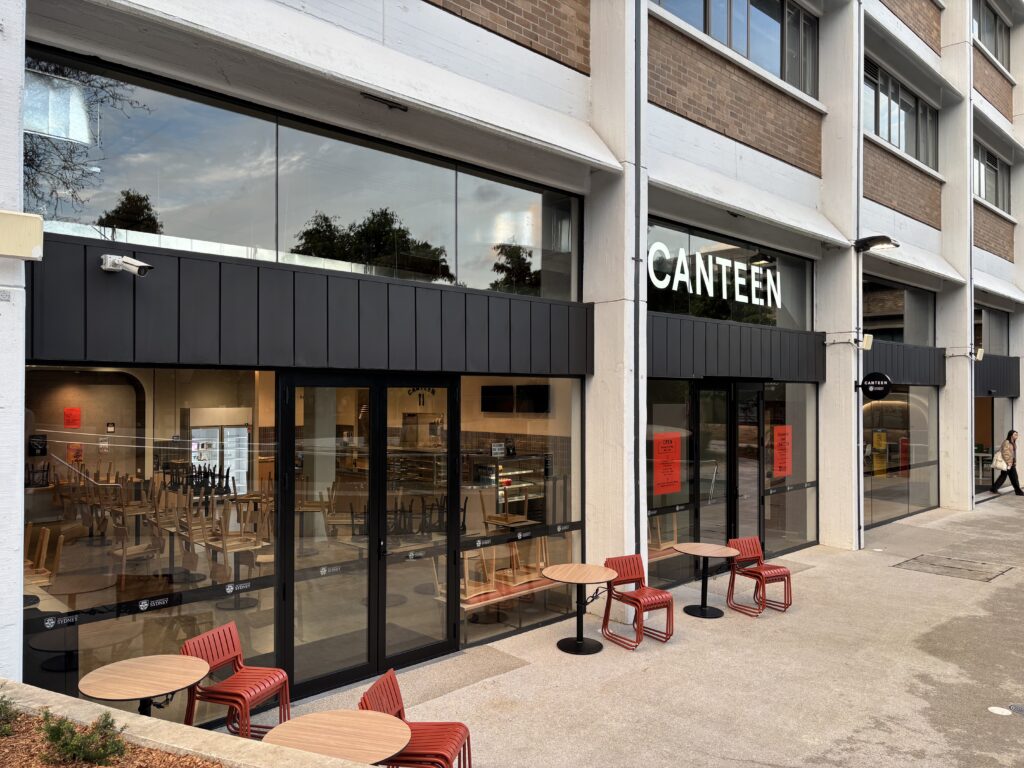
One example is the campaign for affordable meals on campus. Over the past few years, SUPRA and the University of Sydney Students’ Representative Council (SRC), which represents all undergraduate students, have worked with the University on a $5 hot meal initiative to improve access to affordable food. We gathered student feedback, contributed to reports and spent considerable time working closely with the University to advance the initiative. In August 2026, the University opened a dedicated $5 canteen, providing students with access to affordable hot meals on campus (Figure 1).
I am genuinely grateful that the University leadership listened to students’ advocacy and translated it into a tangible improvement. At the same time, this achievement raises a broader question: in a higher education sector that generates so much economic value, why are we still having to fight to make a basic lunch affordable for students?
Of course, a five-dollar meal cannot resolve broader problems of high rents, tuition fees or wider living costs. The same distinction between reputation and practical experience applies to housing. We can continue to tell communities how much revenue international education brings to Australia, but those figures do not directly answer whether housing is affordable, whether supply is adequate or how universities and governments are responding to these pressures.
Better communication matters, but it cannot substitute for meaningful action. Sustainable social licence depends not just on how we communicate the value of international education, but on whether students and communities can experience that value in their everyday lives.
Constructive scepticism is not distrust: genuine partnership must go beyond consultation
The third point is about student participation. Student criticism is sometimes interpreted as evidence of declining institutional trust. This need not be the case. Students often raise concerns precisely because they trust that universities can do better and expect them to uphold principles of fairness, transparency and accountability. A trustworthy university is not one that never receives criticism, but one that listens, explains its decisions and responds with meaningful improvements.
This raises the question of what role students should play in university governance. I value the opportunities the University of Sydney provides for student representatives, including international student representatives like myself, to participate in the Academic Board and other university governance committees. At the same time, there is still room to strengthen students’ influence over university decision-making.
Recently, the University has been working with SUPRA, SRC and the University of Sydney Union (USU) on a new Student Partnership Framework. A key distinction we have emphasised is that the opportunity to express an opinion is not necessarily the same as having meaningful influence on decisions.
We already have hundreds of student representatives across faculties and student associations, alongside various channels for student participation, including surveys, focus groups, consultations and workshops. Yet in areas such as housing, safety, wellbeing and employment, student involvement is not always embedded in decision-making to the same extent as it is in academic governance. Independent, democratically elected student organisations should be included from the beginning, when problems are identified and policies developed, rather than invited only to comment on proposals that are largely settled.
Genuine partnership also requires mutual trust. We often ask students to trust universities; it is equally important to ask whether universities trust the independence and judgement of students and student organisations.
One experience illustrates why this matters. SUPRA once proposed organising pre-departure information sessions in China for students preparing to study in Sydney. The aim was to offer practical and honest guidance on housing, transport, living costs and where students could seek help. During discussions, concerns were raised that being too open about these challenges might discourage prospective students from choosing Australia.
I understand the desire to present a positive picture. Yet this experience raised a question: should students feel confident because they have only heard positive information, or should they develop lasting trust because they have received honest information and realistic expectations? I believe the latter is more sustainable. Explaining that Sydney can be expensive, that finding employment can be difficult, and that students should prepare for potential challenges does not necessarily undermine confidence; it helps them make informed decisions.
This is one of the important contributions of independent student organisations. We bring students’ lived experiences, different perspectives and practical expertise to help universities improve. We want students to understand both the opportunities and the challenges of studying in Australia, and still believe that Australia is a place worth choosing and trusting.
International students are not only beneficiaries of opportunities: they also create opportunities for others
International students’ contributions are often measured through tuition fees, workforce skills, language capabilities and cultural diversity. All of these are important, but their contributions go much further. Through student representation, international students are already helping universities identify problems and improve services. They are also creating new opportunities for their peers and communities.
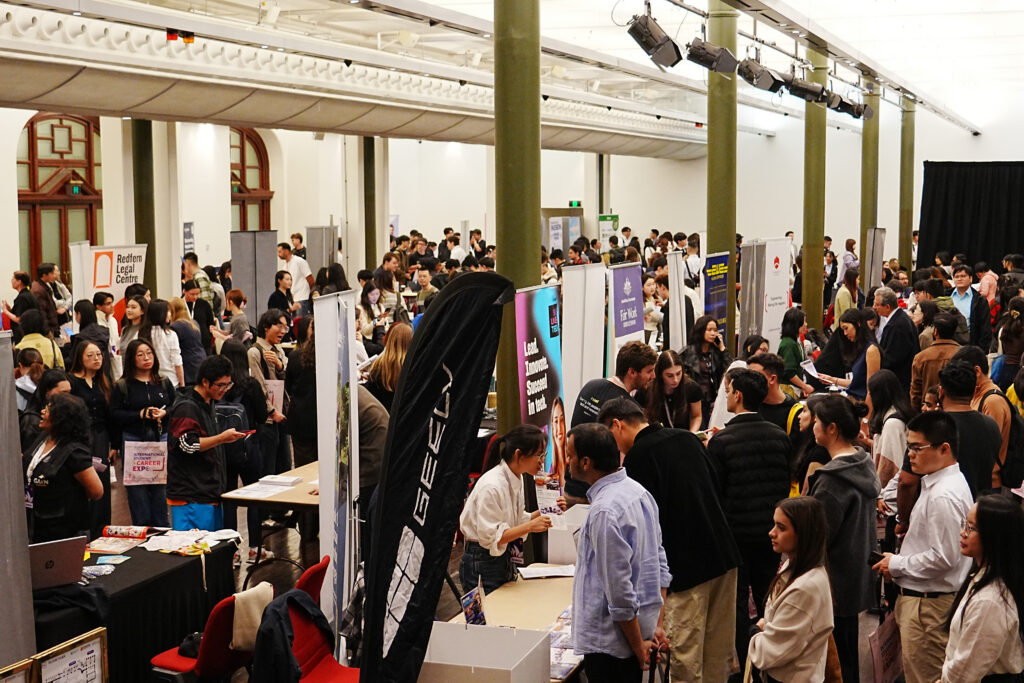
In early October 2026, SUPRA and the UNSW Postgraduate Council (PGC) jointly organised the International Student Career Expo at Sydney Town Hall (Figure 2). The event attracted approximately 3,500 registrations from across Australia, with some students even travelling from as far away as Perth to attend, and brought together 45 participating organisations. The campaign responded to a challenge familiar to international students: many possess valuable skills and legal working rights, yet gaps in information and professional connections can make it difficult for students and employers to connect.
For me, the most important part of this story is that the people creating these opportunities were international students themselves. I had the privilege of working with a dedicated and passionate team of students from different countries and academic backgrounds, who spent months contacting thousands of employers, building partnerships and organising an event to create opportunities for thousands of their peers.
This is something we often overlook. When the sector discusses international students’ contributions, it frequently focuses on the skills they might bring after graduation or future labour shortages they might help address. But international students are already making contributions while they are studying. We identify problems, bring people together, mobilise resources and create opportunities for our communities.
This is how social licence is built in practice: through real opportunities that strengthen trust between students, employers and institutions. We have already received messages of thanks from both employers and students, including one from an employer who shared that a student they connected with through the Expo is now working at a desk directly opposite theirs.
These contributions do not necessarily end at graduation. We all come from different countries and have different plans for the future. Some of us may build our lives here in Australia, while others may return home or move elsewhere. Yet the friendships, professional relationships and international networks we develop during our time here can last for decades, creating opportunities for future research collaborations, business partnerships and stronger ties between Australia and the rest of the world.
When we discuss social licence, we should therefore recognise the institutions international students are already helping to improve, the opportunities we are creating and the long-term relationships we are building. The time we spend here will one day become memories that we carry with us for a lifetime. Wherever our futures take us, these memories may become bridges between Australia and our home countries, shaping who we become, the communities we build and how we share our experiences of Australia with the world.