By Wenjia Tang
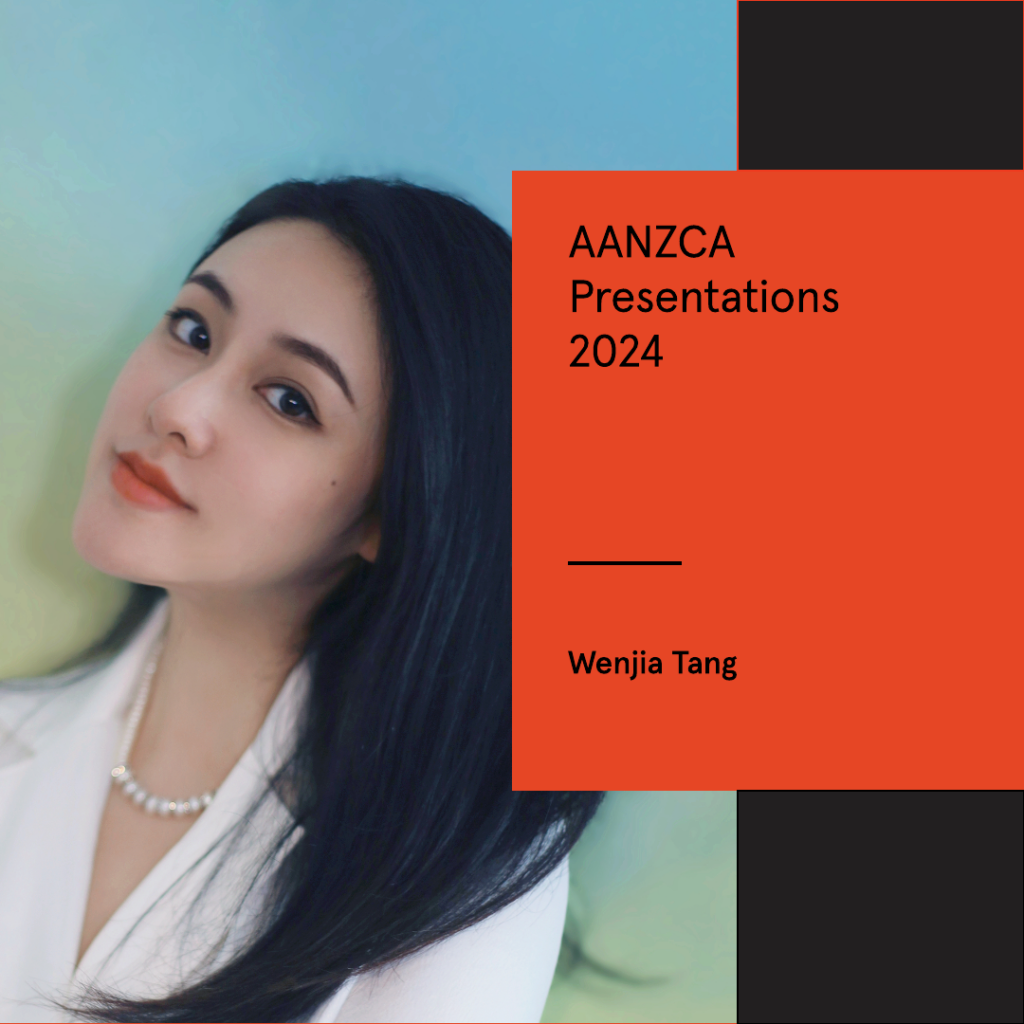
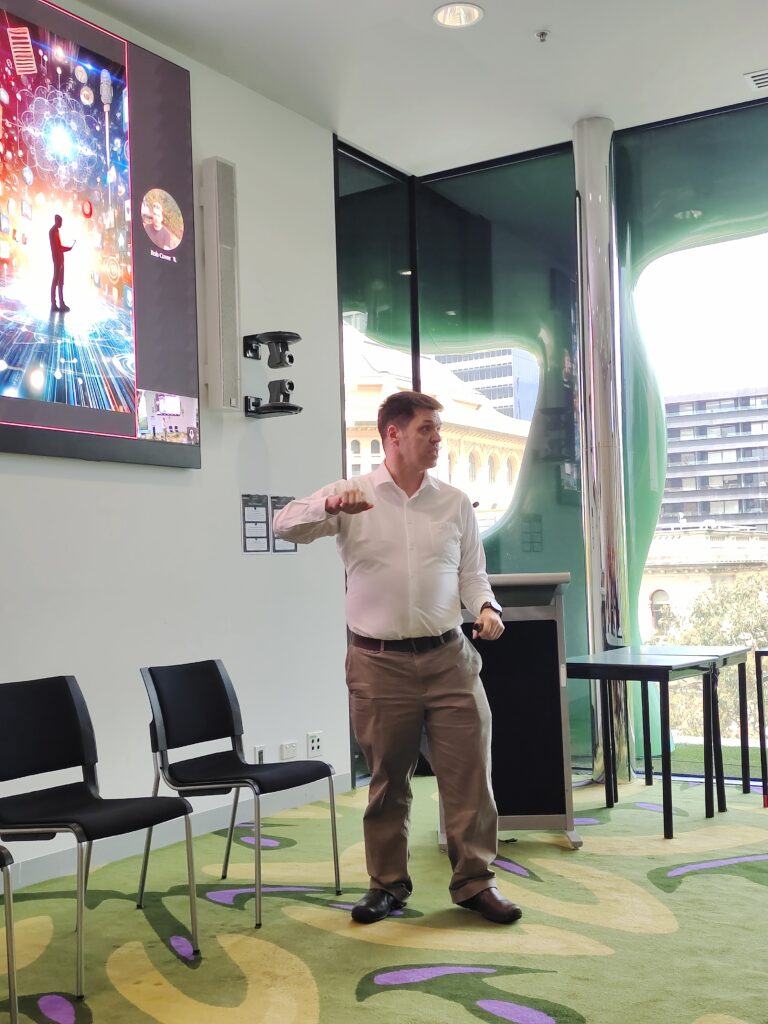
I recently delivered two presentations at the AANZCA 2024 Conference in Melbourne, showcasing emerging research into digital media platforms, global streaming strategies, and local content production. The presentations—a paper exploring Netflix’s influence on Australian content production and a collaborative panel on qualitative approaches to digital media research—illuminated the intricate interplay between global media technologies and local creative landscapes.
In a solo paper presentation, I examined how global platforms balance their dual roles as local content collaborators and global distributors.
Abstract:
Australian Stories on Netflix: Navigating Global Reach and Local Narratives
“Today, you are witnessing the birth of a new global Internet TV network (Reed Hastings quoted in Murgia, 2016)”, Netflix, with an ambitious mission is to evolve into a global Internet TV network and catalyse a strategic expansion across over 190 countries with a diverse content library. In Australia, where Netflix boasts a penetration rate of 65%, the platform has altered viewing habits and content accessibility, offering a mix of global and local productions (Stoll, 2024; Turner, 2018). Netflix has been instrumental in renewing interest in viewing localised production under its transnationalist business principle (Idiz, 2024). However, the representation of local Australian content is lacking, raising concerns about the platform’s commitment to fostering local culture and stories (Lobato & Scarlata, 2019; Australian Government, 2023). This study explores the impact of Netflix’s strategic expansion into the Australian market, assessing how its global streaming model influences local content production and circulation. Combined with case studies of 3 Netflix Original Australian content – Tidelands (2018), Heartbreak High (2022), and Byron Baes (2022) – and 6 semi-structured interviews with relevant stakeholders from different interest groups, the study reveals that while Netflix has made strides in incorporating Australian settings and themes with global/Hollywood production standards, there is a pervasive challenge in maintaining local cultural authenticity and significant engagement with local narratives. This research contributes to understanding the complex interplay between global digital platforms and local content ecosystems, and enhances Netflix’s role as both a local content provider and a global collaborator.
Digital Media Platforms: Pioneering Qualitative Research Approaches
In the panel “Digital Media Platforms: Pioneering Qualitative Research Approaches”, which I organised and chaired, 4 USYD PhD candidates investigate the transformations brought about by media platformisation and digitisation. This interdisciplinary discussion explored how digital media reshapes cultural production, user experience, and the monetisation of creative practices across platforms.
As part of the student panel, I presented a working-in-progress paper collaborated with colleague Tianyi Zhangshao, on how Tencent Video showcases the cross-platform navigation and affordance integrations as the key features of a Superapp.
Abstract:
Tencent Video’s Platformisation Strategy: A “Streaming Superapp”?
Software and applications create interactive spaces that manifest cultural values through negotiations among users, developers, and advertisers (Light et al., 2018). Through the prism of platformisation (van Dijck, 2024), software introduces technological change into media practices. It is crucial to acknowledge the transformative effect of digital technologies on media research in converting the ongoing realities of daily life into digital frameworks (Berry, 2011), particularly with a focus on non-Western and understudied contexts. Utilising the technical walkthrough (Light et al., 2018), this article examines the PC-based interface of Tencent Video, a Chinese streaming service, aiming to delineate how the platform’s technological mechanisms sculpt the user’s inter-media experience and bolster the initial ‘all-in-one’ platformisation strategy. We observe and record interactions with the interface layout, screen functionality, and service migrations (Karat, 1992), offering critical analyses and evaluations of their potential for application across different systems. The findings reveal that Tencent Video adheres to the ‘superapp’ model (Dieter, 2019), which integrates multiple services within a single application through a strategy that centralises modular services within a cohesive framework. This model aligns with the contemporary media landscape’s emphasis on transmedia utilisation, and distinctly diverges from the prevalent business models of Western platforms (Jia et al., 2022). This article presents a case study that not only demonstrates Tencent’s unique approach to platformisation but also proposes a superapp framework to further explore how Tencent video is integrating cross-media services and content through the embedded affordance to guide user navigation through its interface.
About Wenjia Tang
Wenjia is a PhD candidate, research assistant, and tutor in the Discipline of Media and Communications at the University of Sydney. Her thesis surveys the changing business model of streaming media and the impact of glocalised entertainment media production and consumption. She is also interested in general Big Tech and emerging technologies regulation and has a particular focus on the dynamics in the Internet sphere between the U.S. and China with a digital geopolitics perspective.
Event Gallery
Leading Mediated Trust scholars also attending AANZCA 2024, include Professor Terry Flew, Dr Agata Stepnik, Dr Timothy Koskie, Dr Aljosha Karim Schapels, Dr Dominic Knight and Cameron McTernan.


About AANZCA
Established in 1980 (previously known as the Australian Communication Association), recognised in 1994, and renamed to AANZCA in 2024. AANZCA supports vital forums for communications research, acknowledges exceptional work in the field of communications, hosts annual conferences and produces two internationally renowned indexed journals. As an independent association, AANZCA delivers research that is increasingly important and impactful at a time when new media and communication technologies are shaping so much about how we communicate with each other.