New opportunities – Mediated Trust PhD scholarships

Up to four PhD scholarships are available for research into the relationship of trust to news media, digital platforms, public institutions, and artificial intelligence.

You will be working with a collaborative team of researchers led by ARC Laureate Fellow Professor Terry Flew on the Mediated Trust: ideas, interests, Institutions, Futures project.

Trust has been described as a feeling of safety and security; an attitude of way of thinking and disposition to action; and a relationship between a person and others. Trust has been described as an invisible institution, whose existence is hard to measure and is more often observed in its absence than in its everyday role.

Communication is central to social trust, as seen with concepts such as mediatisation, misinformation and post-truth. A central premise of the concept of mediated trust is that something has fundamentally changed in the contemporary public sphere linked to the rise of the Internet and digital technologies. The blurring of lines between experienced reality and that which is digitally mediated generate new forms of sociality and social identity, civic engagement, political polarisation and cultural practice. Mediated trust points to the relationship of trust to technology, whether through online news, digital platforms, digital governance or artificial intelligence.

PhD projects in this program will involve in-depth comparative and case study work exploring mediated trust in relation to news, digital platforms, institutions or AI. You will be working with a project team which includes post-doctoral research fellows and data scientists in the Media and Communication discipline Faculty of Arts and Social Sciences.

These positions provide the chance to further research capabilities through international travel and the opportunity to tackle a major issue of our time whilst building research capability and working in one of the world’s leading universities. Successful candidates will also be affiliated with the new Centre for Artificial Intelligence, Trust and Governance at The University of Sydney.

The three-year scholarship is part of an Australian Research Council-funded Laureate Fellowship, and is open to Australian and New Zealand citizens and international applicants.

  •  

For more information and to apply click here.
Share this article

Related Articles

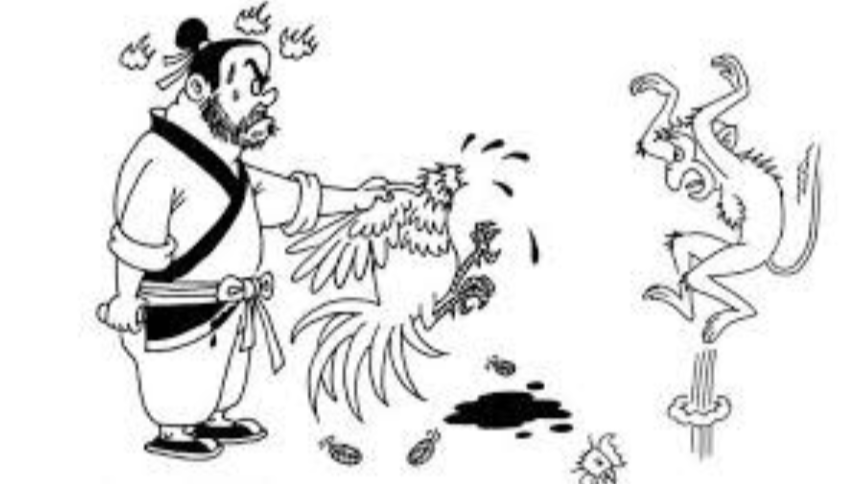
Killing the chicken to scare the monkey: the curious progressive urge to take down Australia’s social media minimum age rules

Evidence from Australia after three months of the Online Safety (Social Media Minimum Age Amendment) Act is that outcomes have been ambiguous. A Compliance Update Report released by the Office of the eSafety Commissioner in March 2026 found that while almost half of surveyed parents had at least one child with their own social media account prior to the restrictions coming into effect, this proportion had decreased to nearly one third following implementation of the ban. Notably, of the parents who reported their child had an account on each platform prior to 10 December 2025, around 7 in 10 reported that their child still had an account, with only 3 in 10 reporting that their child no longer had an account.

Why we are not in a post-truth era

Discussions about trust have characteristically tied the concept closely to that of truth. When we are asked why we consider a particular person trustworthy, the question of whether they tell the truth is likely to feature highly. As the great physicist and Nobel Prize winner Albert Einstein observed, ‘Whoever is careless with the truth in small matters cannot be trusted with important matters’.

To age-gate or not to age-gate? The Australian Social Media Minimum Age legislation and its international impact

When Australia implemented the world’s first legislated social media minimum age  restrictions on 10 December 2025, it attracted significant global attention. The Australian Science Media Centre recorded that the 52 academics registered as experts on the subject were sourced in over 2600 news items worldwide in December 2025 alone. It was extensively covered by virtually every major international news outlet, and I did interviews with BBC, CNN, Al-Jazeera, The Times, Asahi Shimbun and many others.  

Time for Trust: Can we trust Hollywood?

In this episode, Associate Professor Bruce Isaacs dives into the crisis of trust in images – from Hollywood to Instagram – and explains why we may no longer know what’s real. It’s a timely, provocative discussion about how cinema, digital media and AI are reshaping our relationship to truth itself.